
Бесплатный фрагмент - The subpersonalities in your head
Psychological Analysis

The Sub-Personalities of “Zamorochkin”, or
A Psychological Analysis of Mental Knots
Contents
1. Introduction
2. Preface
3. Distrustinus, Justicius, Controllius
4. Doubtinus, Shyminus, Lateius, Forgetinus
5. Competitus, Hurryinus, Cunningius
6. Snackinus, Offendinus, Alwaysguiltius
7. Won’tdoitus, Lazynius, Manipulanius
8. Afterword
Introduction
Friends! To help you understand, the character “Zamorochkin” is someone who overcomplicates things — someone who thinks and analyzes excessively; in other words, a person who approaches situations in an unnecessarily problematic way. The various versions of “Zamorochkin” are subpersonalities that can specifically influence a person’s outlook on life, decision-making, and how they analyze situations.
After you learned about “Zamorochkin” in the book Zamorochkin in Your Head, or What Helps You Be Happy (available on all online platforms), you discovered who he is, where he came from, and how he embarked on a journey that transformed him completely. Now he has begun working on his Sub-personalities — of which he has many. And of course, these sub-personalities don’t belong only to the main character; his friends, acquaintances, companions, and partners also have them!
The book is written in a fictional style and describes Zamorochkin’s life, where he encounters various people whom he analyses — either himself or through the author — from a psychological perspective.
This is a series of several books in which we will explore about 90 of Zamorochkin’s Sub-personal changes. In this volume, we focus on 16 of them, invented by the author and illustrated by Natalya Romanova:
— Distrustinus, Justicius, Controllius (Doesn’t trust, Fair, Controls)
— Doubtinus, Shyminus, Lateius, Forgetinus (Doubts, Hesitates, Arrives Late, Forgets)
— Snackinus, Offendinus, Alwaysguiltius (It’s a Problem, It’s a Complaint, It’s Always My Fault)
— Competitus, Hurryinus, Cunningius (Competing, Hurrying, Being Cunning)
— Won’tdoitus, Lazynius, Manipulanius (He doesn’t want to, He’s lazy, He’s manipulative)
We have grouped them into clusters of 3–4 because they share similar characteristics.
I express my gratitude to everyone who contributed (through feedback and support) to the writing of this and other books in the “Sub-personalities of Zamorochkin” series — especially to my wife and our students, game practitioners. All the stories are drawn from my practice; names and locations have been altered beyond recognition. If you find it inappropriate that your name coincides with a character’s and feel inclined to take offence or react negatively, please refrain — the names were chosen randomly!
Preface
Let’s first take a brief look at this topic. There isn’t much written about Sub-personalities in various sources, and I haven’t seen them analysed from a psychological standpoint with illustrative examples.
Many people interested in psychology have heard the story of Billy Milligan’s personalities. Were they personalities or sub-personalities? Where does schizophrenia end and a healthy person’s multifaceted psyche begin?
In psychology, the transformation of automatic thoughts is metaphorically referred to as “cockroaches”, “mental knots”, sub-personalities, inner voices, the inner critic, etc.
For instance, Robert Assagioli’s theory began developing in the 1920s, drawing on ideas from various psychotherapy schools: Gestalt, psychoanalysis, hypnotherapy, and transpersonal psychology. Assagioli proposed a new model of personality, where each person is a collection of different sub-personalities existing at various levels of development. There is a primary sub-personality that influences the interaction of all the others.
Richard Schwartz, the creator of the Internal Family Systems (IFS) model of systemic family therapy, wrote that the psyche consists of different parts — sub-personalities. Each can have its own specific needs, goals, levels of maturity, and even memories. They interact with one another, almost like family members: sub-personalities engage in dialogues, conflict, and form alliances against each other.
Every person has unique sub-personalities that can be categorised as either vulnerable or protective roles. Vulnerable parts of the personality are called “exiles”.
As psychologists say, we all come from childhood — so due to difficult experiences during childhood and adolescence, “Exiles” are formed. They store information about trauma: pain, anger, resentment. Often, these are reflected physically (in the body), as if frozen in the moment they emerged.
For example, a girl was bullied at school, and neither teachers nor parents protected her. Her mother died early, her father sent her to live with her grandmother, and rarely visited or engaged in her life. Inside her, a sub-personality of the schoolgirl emerges, experiencing pain, helplessness, and shame.
Such sub-personalities are often blocked by the psyche — becoming “exiles”. For a girl who survived bullying, it’s unbearable to recall the pain, helplessness, and indifference of others. These emotions are so intense that experiencing them is frightening — so the mind locks away the room with the “exiled” sub-personality and tries to forget its existence altogether. (I watched the film “Daughter of God”; the first time I didn’t understand it at all, but the second time I delved deeper. If you watch it, you might agree with me that this is exactly what happens — forgetting, erasing the memory, and overlaying a new narrative on that event. Instead of a “Suffering Sub-personality”, a “Magical Sub-personality” emerges.)
But it’s impossible to simply erase part of oneself. The “Exile” will manifest in some way — through unexplained anxiety and anger, intense feelings of loneliness, bodily tension, or terrifying dreams. One of the goals of sub-personality therapy is to help a person remember these parts of themselves and heal them.
P.S. When a young woman first approached me, I wasn’t familiar with various theories about sub-personalities to address her “cockroaches” and “mental knots”. They prevented her from sleeping, eating, and making normal decisions. Of course, I recalled Billy Milligan’s story and thought this wasn’t the work of a psychologist or psychotherapist (which I am), but rather a psychiatrist. However, the internal challenge of gaining experience and practice, along with the client’s reluctance to see a psychiatrist, led me to take her on as a client. Initially, I didn’t know what to do with all this, but when I applied my original “Quantum-Matrix Constellation” method, the chaos began to reveal a certain order. We arranged all her inner “family members”, spoke with each of them, established a hierarchy, distributed roles and responsibilities, agreed on who could speak and when, and… appointed a leader. The therapy improved her condition — her sleep returned to normal, anxiety subsided, and many other issues resolved. These sub-personalities weren’t connected to Zamorochkin’s sub-personalities, which exist, live, and are equally important — but they are different. How multifaceted our psyche is — I never cease to be amazed by it!
Our “Zamorochkin” emerged from the transformative game “Matrix of Actions”, which features this character in the form of MAC (Metaphorical Associative Cards). The game was initially designed for anyone interested in personal development and meaningful leisure time — for families and businesses. It was meant to be light, superficial, and fun! In contrast to the fundamental consultative tool called the transformative game “Quantum Matrix of Fate”, intended for psychologists, astrologers, coaches, psychosomatologists, tarot readers, and game practitioners — professionals in helping professions.
To our surprise (my wife’s and mine), our game practitioners who owned the games struggled to understand how to work with and interpret Zamorochkin’s sub-personalities and “Action Prohibitions”. After realising this, we created video lessons for them and decided to write books: I on “Zamorochkin”, and my wife on “Action Prohibitions”. Please read and enjoy them, and apply the knowledge in your practice — both for yourself and for others. For our task in helping professions is to identify the causes and guide people toward healing their mysterious psyche!
* * *
Zamorochkin began recalling events from his life since childhood. They left their mark on his behaviour and shaped his attitudes toward various beliefs and values.
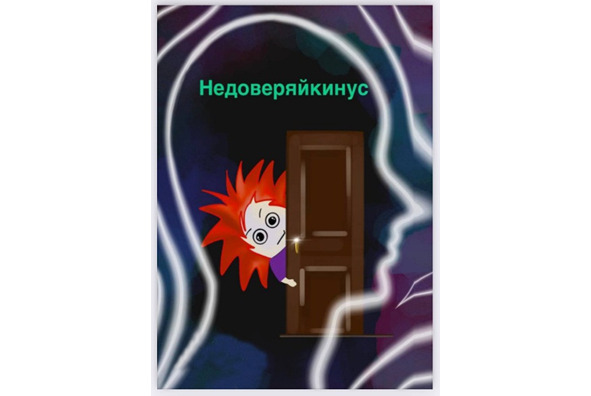
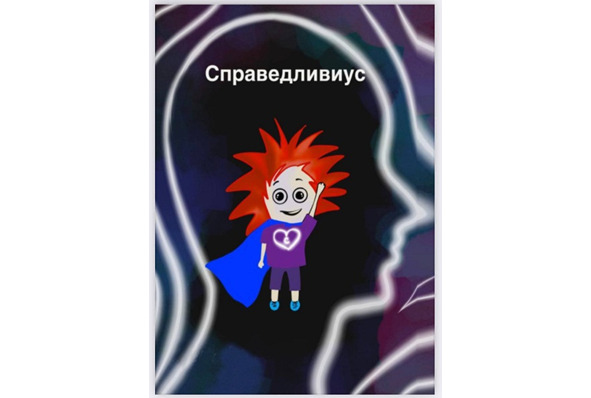
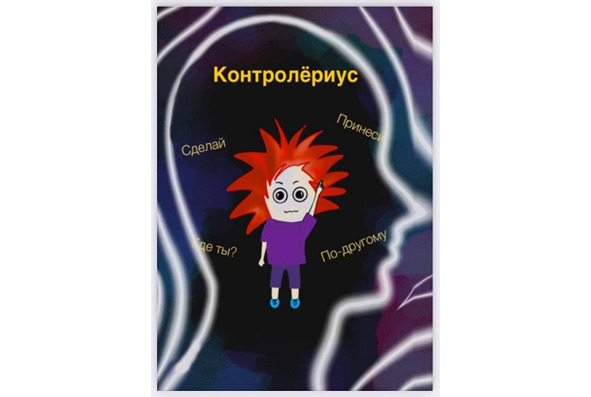
Now let’s meet some of them — Distrustinus, Justicius, Controllius. Who are they? Where did they come from? And how do they influence his fate?
“Listen, we’ve been dating for so long, and you’ve never been to my place. Maybe I could cook dinner, and you could come over?” Natasha said into the phone to Zamorochkin.
“Well, you know I don’t like going to people’s houses. We’re having a good time as it is,” Zamorochkin replied.
“Yes, I understand, but still… I want to surprise you!”
“Okay, let’s call after work.”
Each went about their day at work, and the day flew by in a flurry of activity.
“My workday’s over, I’m heading out,” Zamorochkin messaged.
He was in high spirits — he’d just closed a lucrative deal for the company and was thrilled about the substantial commission he’d earned. His car sped through the city, dodging traffic jams, while upbeat music played: “Yeah, what a great day!” Zamorochkin shouted, singing along to the radio.
Natalia got off work early that day too. Listening to cheerful music and humming along, she prepared dinner.
“Uh-huh, everything’s ready,” she said aloud. “I think he’s going to propose to me tonight! It’s about time — otherwise I’ll end up an old maid.”
The doorbell rang, and Natasha spun around in front of the mirror, adjusting her hairstyle and dress one more time — it fit her perfectly today. “You’re a beauty!” she said to her reflection with a smile.
“Coming, coming!” Natasha turned the key in the lock.
When Zamorochkin walked in, he was greeted not only by Natalia but also by her pets. It turned out she had two lovely little dogs. They wagged their tails and barked with delight at the visitor who’d brought them treats!
“Y-y-you have dogs?!” Zamorochkin stammered.
“Yes! As you can see! Musya and Busya!” the apartment’s owner replied joyfully.
“Great! But I don’t like dogs! You never told me about them!”
“That was the surprise!”
P.S. Natasha’s “Distrustinus” had kicked in. She didn’t really know how Zamorochkin would react if she’d told him about the dogs beforehand. He didn’t like dogs — not at all (this was evident from how he behaved around other dogs; he often talked about it). If she’d admitted it earlier, he might have immediately ended their relationship. But she wanted to get married! So she decided that if she told him later, after he’d grown accustomed to her, he probably wouldn’t give her up. That was how she saw it, from her perspective. She didn’t consider his feelings about dogs (a serious pain point in his “mental knots”). What was this connected to? How deep did the pain go — and was it really pain? What could be done to make him like dogs?
These questions arise for anyone who understands that a particular attitude is linked to some past event or pain. And if you only think about yourself, you can’t change a person or their attitude with the snap of a finger. He saw the situation his way, she saw it hers. Each was right from their own perspective, yet wrong from the other’s (if she loved him so much, why not give the dogs to a good home? If he loved her so much, why not accept these lovely creatures?).
Her “Distrustinus” stemmed from insecurity, a desire to play by her own rules, and to benefit herself. But such games always lead to unfortunate consequences sooner or later!
Zamorochkin began taking off his coat and shoes, looking around uncertainly, unsure where to put them.
“A-and… they won’t tear up my shoes or… do their business in them?!”
“No, of course not! They don’t do that sort of thing! Musya and Busya are well-mannered ladies!” Natalia laughed.
The young couple sat down at the table, enjoying their meal, sipping champagne, and having pleasant conversation about neutral, light topics.
Zamorochkin hadn’t come empty-handed. He too had been thinking about proposing to Natalia. They’d known each other for a long time and had much in common. But tonight, he kept fidgeting in his chair, scratching himself, sneezing, and seemed unusually distracted — things that weren’t typical for him. And the dogs kept circling around their feet, trying to beg for treats or rub against his trousers.
“Natasha, I’m going to head out. Thanks for dinner — it was fantastic! But it’s getting late, and I have to get up early tomorrow!”
Less than five minutes later, Zamorochkin was dressed and bolted out of the apartment. He took a deep breath of the street air, walked slowly to his car, got in, and turned the ignition key. The car started easily, his favourite radio station “Chocolate” came on, and he pulled away. Lost in thought, Zamorochkin reflected on the evening.
“I don’t like dogs. Not at all! And that smell… No matter how clean it is, it’s still there! What should I tell her? Let’s live together, but without the dogs? Where would she put them? Break up?” His hand unconsciously began rubbing the scars on his other arm — scars from a dog bite he’d suffered as a child.
“Why don’t I like dogs? I used to love all animals!” He looked at his scar. “Yes, yes! I completely forgot! A dog bit me when I was little. I thought all that was behind me, that the problems were in the past. But my body remembers! That’s why I started itching and sneezing. I never paid attention to that before. Probably because I haven’t been around dogs for so long… yes, yes, always from a distance…” And he drifted off into his memories…
* * *
Zamorochkin was growing up, developing — he was already going to school and had learned to read and write. One day, he was playing in the neighbourhood playground when some neighbours were walking their dogs nearby. Some had large dogs, others small ones. The dog owners chatted with each other, alternately petting their own pets and their neighbours’ dogs.
Watching this scene, Zamorochkin didn’t hesitate — he ran over to the dogs and started petting them one by one. The neighbours smiled, delighted by their peacefully-minded furry friends, and praised Zamorochkin for his love and sensitivity.
But not all animals — and perhaps not all their owners — were so peaceful and friendly. A lady walked into the yard with her small dog. She was always aloof, distant, and haughty — qualities her decorative Chihuahua mirrored by snarling and barking at everyone.
Despite this, Zamorochkin felt such a strong desire to share his love, openness, and trust that he approached the little dog without much fear. He spoke to it calmly and gently, as if it weren’t a “little monster” but a weak, defenceless creature trembling with fear.
But an animal is still an animal! Their instincts come first, and they don’t have a wise conscience to regret what happened or follow moral norms. Without thinking — without any thought at all — the little dog latched onto Zamorochkin’s wrist, biting vigorously until blood formed a pool on the grass in mere seconds.
People rushed over, offering handkerchiefs to bandage the boy’s arm. Zamorochkin grew dizzy and lost consciousness. When he woke up, he found himself in his bedroom. His parents were talking loudly behind the closed door — he could hear every word. From what he heard, he understood that he would need rabies shots, and his parents would sue the neighbour to have her vicious little dog put down.
If Zamorochkin had lived 40 years ago, he would have had to endure 40 shots in the stomach! But now there were better medications available — just six shots in the shoulder, though the procedure was still unpleasant.
He received stitches. The story doesn’t reveal what happened to the dog, but the unpleasant memories — and the scar on his arm — remained.
* * *
Zamorochkin and Natalia had to part ways because he developed a severe allergy — his eyes swelled, he had constant runny nose and sneezing, and his body broke out in patches. Psychosomatics worked at 100%. But as soon as Zamorochkin learned he had two weeks of sick leave, he promptly booked a last-minute trip to a warm country.
Indeed, just two days after checking into his hotel and diving into the sea, all allergy symptoms disappeared.
P.S. This situation shows that deception, sooner or later, always leads to consequences — often quite unfortunate ones. They had grown accustomed to each other. Breaking up is always hard — for both parties. No matter how “cold” your partner might seem, it’s still a tragedy for them. So much shared experience, so many interesting moments… and time. For women, not for men. He always has options — he doesn’t need to bear children, but for women, time is definitely not a friend!
If she had given up her pets for the sake of their relationship, would he have agreed to continue? Most likely not. Why, you might ask? Because of her deception? Because her “Distrustinus” and his “Controllius” couldn’t agree or negotiate? Perhaps!
Meanwhile, “Justicius” drew its own conclusions for both of them. For her: “This isn’t my type, and there’s no true love here — I just feel it’s time to get married”. For him: “Honestly, I never really loved her — maybe just for the sake of my health”.
Author’s Note
Once, I appeared on television as a psychological expert on Channel One in the programme “Him and Her”. The guest lineup was star-studded: Kay Metov, Viktor Merezhko, Yegor Konchalovsky, Yulia Sviyash, and other well-known personalities. Whenever I encounter any interesting situation, I always say: “I’m lucky!” And I truly was lucky to be there.
The topic was “Husband for an Hour”, but we discussed guest marriages and briefly touched on dogs. Oh, how the “dog lovers” among the guests perked up! They spoke with such pleasure about their pets! But this is precisely the sad part. Many women and married couples adopt dogs (or cats) and give all their love to them. So how can a child come into their lives when there’s no room left? How can a man live with a woman when the territory is already marked and occupied?
And if the dog constantly lies on the bed, gets jealous of the owner, and misbehaves toward a new partner, many people choose… the dog!
These are just thoughts to ponder, dear reader. Indeed, my wife and I frequently encounter such “dog” and “cat” lovers asking: “Why can’t I find a boyfriend or get pregnant?” Of course, we consider other factors too — medical issues, compatibility, traumas, illnesses. But this factor does play a role!
Zamorochkin lay on a sun lounger, sipping an exotic cocktail through a straw and admiring the waves rolling in — as if in agreement, they arrived at the shore at regular intervals.
Nearby, two children were building sandcastles and splashing each other with water from a bucket. For a while, Zamorochkin drifted off, closing his eyes and enjoying the sounds of surrounding tranquility.
He woke to silence. He sat up abruptly, looked around, and saw the children’s parents relaxing nearby, shielding themselves from the sun with summer hats. Zamorochkin’s heart began pounding — he didn’t understand the source of his anxiety, but something felt missing in this peaceful scene.
“That’s right!” Zamorochkin cried out.
“Where are the children?!” he shouted toward the parents.
Without hesitation, Zamorochkin ran to the water and swam out in the direction where the children had been playing. He swam farther and farther from shore, diving and resurfacing… Meanwhile, the parents on the beach were waving and shouting something back at him.
When our hero turned his head toward the shore, he saw the parents and children all together, shouting to him from the beach.
“Come out! We’re here! Everything’s fine!”
Zamorochkin emerged from the water exhausted, collapsed onto the sand, and fell asleep… He was dreaming…
* * *
Zamorochkin was reminiscing. When he was little — about six years old — he went to the river with his friends. He played with other kids, they swam and sunbathed together, but he was still too young to know how to swim.
One moment, he was splashing near the shore — the next, the current was carrying him farther and farther away. It pulled Zamorochkin deeper into the river until only his head was visible above the water. He struggled to make his way back to shore, but the current was stronger than he was, dragging him further out. No matter how hard he tried, nothing worked.
With his last bit of strength, Zamorochkin raised his hand into the air — and then a miracle happened! A boy floating on a lifebuoy saw his hand and grabbed him. Together, they made it back to the shore.
Exhausted from his battle with the river’s force, Zamorochkin didn’t even manage to say “Thank you”. He lay down on the sand, completely drained, trying to catch his breath.
He didn’t understand what was happening to him — he wanted to both scream and cheer with excitement, and at the same time, cry. He knew that just a little more and the river’s power would have carried him away, and he would never have seen his parents again — or rather, no one would ever have seen him again. Death had been a hair’s breadth away.
This was his first encounter with reckless, careless, and irresponsible behaviour. Perhaps if he had listened to his parents’ advice and only gone to the river with adults — not just with friends — this situation might never have happened!
After some time passed, the river incident faded from memory, and Zamorochkin continued exploring this fascinating and mysterious world.
* * *
When he opened his eyes, he saw the faces of two children and two adults hovering over him. He immediately recognized them as the beach neighbours whose safety had driven him into the water.
“He seems to be alive!” the little girl muttered.
“Yes, yes!” the parents chimed in unison. “Thank God! He opened his eyes!” the woman whispered.
The little boy tried to open the main character’s eyes wider with his finger, peering into them.
“Thank you! I’m fine!” Zamorochkin began to sit up from his lying position. “I thought that… Well, I just ran… And they were here… Yes! Thank God!” he continued, still speaking incoherently.
Zamorochkin lay back down on his sun lounger.
“Wow, those are some memories!” he thought. “The kids were playing safely elsewhere on the shore, and I thought they were drowning… What was that about? And my childhood memory just surfaced…”
Two events had unfolded in such a short time where Zamorochkin couldn’t control himself.
“Exactly! Control!” he exclaimed.
“Where did this control come from? Is it good or bad for my state of mind, my psyche?! Psychologists say that the Controller isn’t actually that great!” Zamorochkin thought, simultaneously searching online. “Alright, alright! So what do they write there?”
* * *
From a psychological perspective:
“The desire to control everything is a defence mechanism of the psyche, known in psychology as “omnipotent control”, which typically hides deep-seated fears. This illusion of omnipotence is actually aimed at avoiding feelings of defencelessness or helplessness.
Controllers see themselves as the centre of the universe, which leads to their two biggest issues: responsibility and guilt. If I am so omnipotent, I must foresee everything, plan everything, and control everything — and if something goes wrong, it must be my fault, even if I wasn’t present at the time. Such a person can’t admit that some things are beyond their control, that some events can’t be predicted or influenced. Because that would mean saying goodbye to their grandiosity — and they can’t accept that.
Gradually, this total control extends to their close circle: they force everyone to walk in line. Often, this stems from fear of social judgement. After all, if a person doesn’t regularly check in with their family about where they are, what they’re doing, or how they’re progressing, it means they’re being irresponsible toward their family. In other words, they don’t care at all about how their loved ones live — and in society’s eyes, they will appear irresponsible and unpromising.”
“Partially, I can agree, of course, but…”
“There are various moments shaped by a person’s life experience,” Zamorochkin reflected. “For example, I had two negative experiences — nearly drowning and being bitten by a dog. Of course, there was also the control from parents, educators, teachers, coaches — all of them wanted to protect me and help me overcome difficulties. But other people have very negative experiences too. So how can they live without control?!”
Over the course of life, character develops, conclusions are drawn from experiences, and everyone moves through life based on all of that. Of course, control — let’s call it “Controllius” — is always present. Sometimes it helps, sometimes it interferes.
But in either case, it’s necessary.
Now, when I see a dog, I don’t rush headlong or put my hand in its mouth. I stay close to my nephews and friends’ children when they approach water or dogs. I already had a tragic experience of nearly drowning, and I’ll do everything to keep a child safe! This “Controllius” activates my survival instinct — and that’s a positive thing!
Let’s consider the negative side: I might yell at a child or pull them away when they approach a dog. By doing so, I prevent them from gaining the same experience I had. And when they face a dog alone, they won’t have that instinct. But I could first meet the dog myself, learn its behaviour and aggression level, and only then allow the child to play with it! And of course — we’ll never have a dog!
P.S. Control can lead to overprotection of one’s children — in everything! No matter where they are or what they’re doing — the fear that something might happen to them. What to do when such control arises? Of course, work through your own control, your tension, fear, and anxiety.
Because if you control every step of your child (even if they’re 30), they won’t learn anything new, won’t gain experience, and won’t become independent. Our experience is our experience. Someone else’s experience isn’t ours — it can’t be valuable to us because we haven’t lived through it.
Therefore, only working through your own fears and worries will help you release control over your child — and consequently, help them become independent and confident in life. It’s not easy, but it’s possible!
* * *
Zamorochkin was driving along the main road. His thoughts were far from the mood of the weather — the blizzard, slushy snow, and grime kicked up by all sorts of vehicles, especially trucks. Upbeat music played on the radio.
“What do you think you’re doing?!” Zamorochkin yelled at the driver of another car who was trying to pull out from a side road — boldly, abruptly, and defiantly.
“Can’t you see I’m on the main road?! Are you stupid or what?!” Zamorochkin shouted, waving his arms.
The other driver responded with aggressive facial expressions and gestures. Zamorochkin refused to let him in and continued driving almost bumper-to-bumper. Eventually, Zamorochkin passed, leaving the bold driver behind. Zamorochkin praised himself for this — after all, why should he have let him through?!
“I don’t want to, that’s it!” Zamorochkin said. “Why do they all push in… He could’ve waited or waved, like: ‘Please, brother, can I go through?’ Of course, I would’ve let him pass… But bold people need to be taught a lesson!”
As Zamorochkin talked to himself, he didn’t notice that the car ahead suddenly stopped. Two men jumped out, walked up to the driver’s door, and started yelling aggressively for him to get out.
“Hey! What are you doing?!” Zamorochkin shouted back. “What’s your problem? I’m calling the police right now!”
They didn’t back off and tried to open the door. Zamorochkin jumped out and started arguing with them. Luckily, he had trained in various martial arts in his youth, so when the two men started grabbing at him, he easily threw them in different directions. Not expecting such resistance and sensing his strength, they decided to talk calmly with Zamorochkin.
“Guys, you realized you were wrong! Why act so boldly? Of course, I would’ve let you through if you’d waved politely!”
“Brother, okay, we got carried away! Let’s just part ways peacefully! We’re running late!”
“Okay!” Zamorochkin replied, getting back into his car.
“What a night this is turning out to be?! I was driving fine! Not bothering anyone! The music was great! And they ruined my whole mood! It doesn’t seem fair!”
P.S. Justice is a good thing, but… It can be very dangerous, especially nowadays! You could not just get hurt, but even lose your life! That’s why “Justicius” is always accompanied by “Controllius” and “Distrustinus” — they’re like bodyguards and protectors during “Justicius’s” moments of euphoria.
Each of us sees, interprets, and relates to a situation from our own perspective. And both opponents are always right! Zamorochkin didn’t want to let the bold driver through because he was on the main road and was right in this situation. He was thinking about the rules and his own rightness, unaware of the other driver’s circumstances.
Let’s face it — none of us are perfect, and we’ve all had situations where we were running late, breaking rules, being bold, squeezing into traffic. People let us through, we’d flash our hazard lights in gratitude, and keep driving. Everyone stays calm, relaxed, right, and happy with their lives! The “Super-Rational” driver (another sub-personality just occurred to me!) would be pleased! And you wouldn’t be fraying your nerves! As scientists say — nerve cells don’t regenerate!
If you’re confident in yourself — why stress and get nervous?!
Author’s Note
While working with a client, I came up with this phrase: Jesus taught us: “Love your neighbour as yourself!” A psychologist’s therapy involves first teaching the client to love themselves, and only then learning to love others.
There’s something to think about, isn’t there?!
Zamorochkin entered the Moscow Ring Road, and his car slowly crawled in traffic. Instrumental music played on the radio, and he drifted into his memories.
* * *
Zamorochkin was walking around the courtyard when he saw a boy about his age — 12 years old — beating up another boy who was about 7.
“Hey! Why are you bothering him?!” Zamorochkin shouted at the older boy.
“Why are you so cocky?!” the older boy replied.
“He’s smaller than you. Let him go. What did he do to you?”
“The little one was insulting me, so I want to teach him a lesson.”
“Well, that’s not good. But you’re bigger than him. Give him a slap on the back of the head and let him go. He’s still dumb, doesn’t understand.”
“Exactly, I need to make him understand not to do that,” the peer replied. “I could punch you too!”
“Go ahead, then!” Zamorochkin stepped closer, and they grappled with each other. They fought so hard and fiercely that two grown men had difficulty separating them. The boys rubbed their red noses and tried to kick each other.
“Alright, you little brats, stop it!” the men shouted sternly. “Enough! It’s a draw! Shake hands!”
Zamorochkin and the other boy, huffing reluctantly, shook hands — realizing they wouldn’t be released until they did.
After this encounter, they became best friends because their parents knew each other.
* * *
Zamorochkin “snapped out” of his memories when the driver of the neighboring car honked at someone.
“What is this? Courage? Rudeness? Or… justice?” he wondered aloud. “Why does it suddenly wake up inside me? Just sit quietly! If he’s in a hurry, let him pass.”
Zamorochkin had already begun reflecting on his own, after reading so much from psychologists.
“We often see “Justicianus’ from only one side — ours! But in reality, it has many sides.
For example, there’s so much injustice around us! Someone scolds a child for going where he “shouldn’t’… when in fact, the child is just exploring, discovering, curious about everything… He’s simply annoying them. It’s convenient for you — that’s your perspective… not the child’s!
Someone is in a hurry and wants to quickly drive through to where they need to go. They see the situation from their own angle… because it’s convenient for them… Their aggression isn’t really directed at you personally — it’s aimed at the overall situation: nobody yields, yet they desperately need to get through. They’re fed up with constantly asking and “bowing’ to everyone… so they switch on aggression and boldness… and you just happened to be in the wrong place at the wrong time!
Who’s right? You or them? Both! And that’s the truth. It’s justice viewed from two perspectives.
How should one act in such situations? By understanding which part of you is in control at that moment. Why? For what purpose? Why has this subpersonality surfaced?
To prove superiority? To undermine yourself, your own confidence? If you let that driver go, will you lose his respect? No! You’ll only lose points in the eyes of “Justicianus’ and his pride. He’ll scold you, make you feel small — but only if you lack self-confidence, only if you don’t realize you can fulfill yourself without crushing others or placing your proud “Justicianus’ on a pedestal!”
“Wow! I really went deep this time!” Zamorochkin laughed at his own reflections.
* * *
From a psychological perspective:
The sense of justice consists of two components:
1. “The cognitive component” relates to beliefs about how things “ought to be.” These expectations form throughout life, beginning in childhood, and depend on upbringing, social norms, and personal experience.
2. “The emotional component” arises when reality doesn’t match those expectations. This can trigger anger, indignation, disappointment, and resentment.
“Heightened sensitivity to justice” is a state in which situations perceived as unfair provoke intense emotional reactions: indignation, rage, and helplessness.
Бесплатный фрагмент закончился.
Купите книгу, чтобы продолжить чтение.